When was the last time you did absolutely nothing? Is there a difference between “non-doing” in Alexander terms, and “undoing” in other traditions? What about the Buddhist concept of “non-striving”?

Perhaps the most significant shift in my life has been going from a chronic disconnection from my body to a lively and positive relationship with it. And it is my privilege to help others rediscover their own amazing bodies, work that provides true satisfaction.
How do you relate to your body?
I find it crucial to do the “inside job.” I have no control over what plays out on the world stage, but if I become more adept at knowing my own mind and heart, my own flaws and gifts, I stand a better chance of taking actions that can ease the suffering around me, and possibly even address the root causes of that suffering.
I recently put on my Beginner’s Mind hat and asked myself, “What are the fundamentals of my work? What can I say truthfully with confidence, born of direct experience?”
Getting back to basics feels good, and I surprised myself with the number of fundamentals I came up with. What wasn’t a surprise was the fact that they don’t just apply to the work I do. They are all basic truths about what it is to live as a human being.
The Alexander Technique isn’t a set of exercises, but it’s crucial to practice every day. So, what exactly are you supposed to be practicing? And unless you’re a monastic or have the luxury of going on a long retreat, you’re not spending the majority of your time in meditation. So what can you do when you’re not meditating that will support and strengthen present moment awareness?
Start by seeing everything you experience as a place of practice.
We may have delusions about our ability to prevail against dark forces seeking to undermine all our good, hard work but the reality is that we can only use the skills and wisdom we possess. If we don’t have a reliable foundation to draw on during difficult times, we will be thrown on our behinds. You can only use the tools you’ve got at hand, only use them in the ways you have developed.
Are you sitting right now? Chances are good that you are, and if so, let me ask you something: Did you choose the way you are sitting, the arrangement of all the body parts? For most of us, the answer is no. Sitting is so common, and we have been doing it for so long, that we really pay almost no attention to it until something hurts, or until someone asks us to notice. (Did you change your position when you read the question about choice just now? Bet you did.)
Most people practice sitting meditation, either in the classic crossed-leg lotus position, or in a chair. A majority of meditators complain about pain or discomfort while sitting in meditation, at least after more than 20 or 30 minutes, and/or over a long period of practice, such as on retreat. While the practice encourages the acceptance of discomfort as it arises, and there are mindful ways to respond to pain during meditation, it makes sense to establish a balanced, easy pose in the first place. What does Alexander Technique offer in support of this?
Lately during sitting meditation, I often feel my jaw clenching. I notice it as I "come back" to the present moment when my mind has wandered. Frequently my wandering thoughts are future-oriented: planning strategies, reviewing a run-down of tasks to be accomplished, ruminating on what will happen, imagining conversations with people, that sort of thing. I'm beginning to think that the future itself makes me tense.
It is certainly a relief to stay in the present moment, easier to feel relaxed right here, right now. This doesn't just happen in meditation, I clench in many situations: driving in rush hour traffic, reading a contentious thread on social media, making a difficult phone call, hearing Donald Trump speak. It can happen when I'm watching an exciting show on TV, or pulling weeds, or even when I'm enjoying something pleasurable.
So I release my jaw a lot, sometimes multiple times a day, and it is always interesting to notice what has triggered this stress response. As with meditation, it's typically when my mind is spinning out stories based on expectations fueled by anxiety. , regardless of whether the content is positive or negative. This has become so commonplace that I barely notice it -- except when I feel that tension in my jaw.
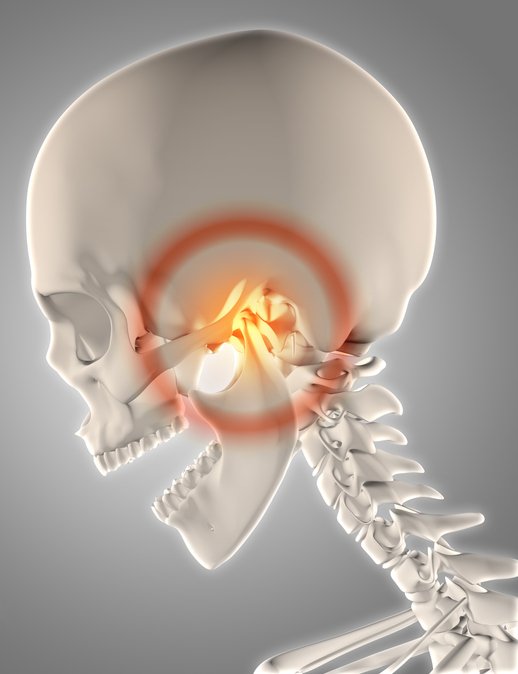
This is what one client calls "the canary in the coal mine," an obvious physical symptom that gets your attention and calls you into awareness of a larger situation. Dharma practitioners might call it a "mindfulness bell," waking you up to what's real, right now.
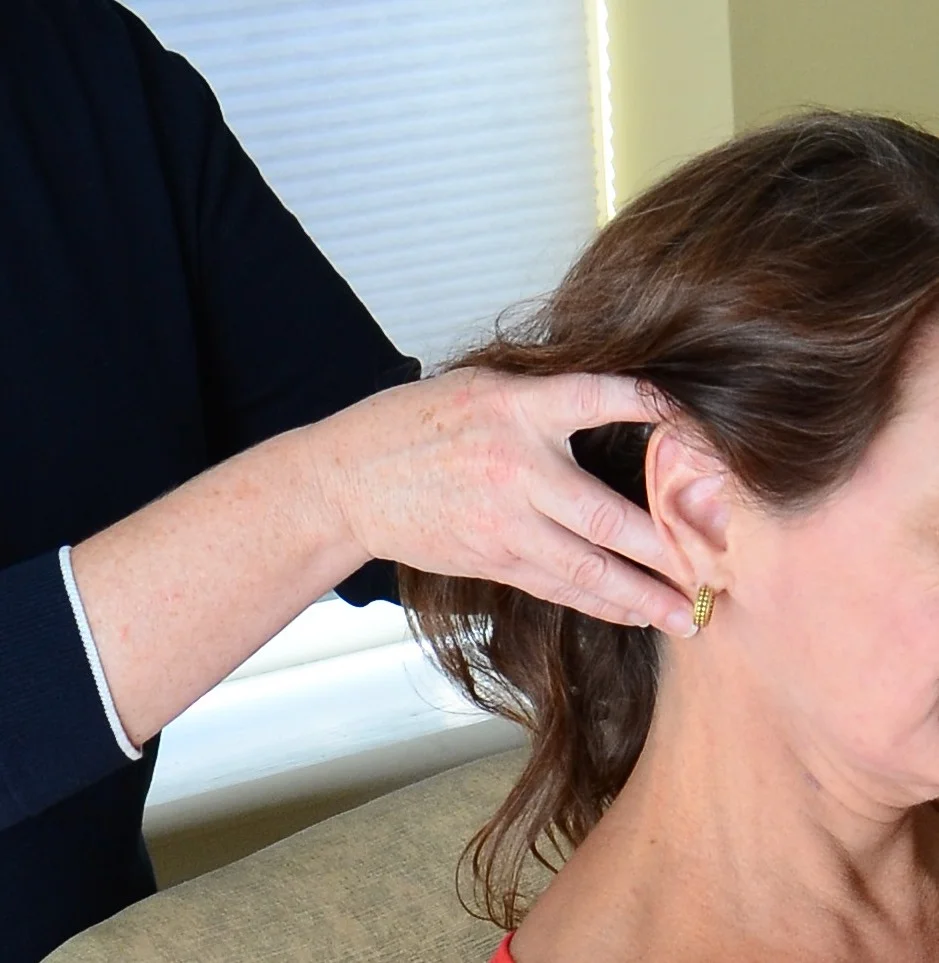
Whenever I notice this jaw clenching, I let it go. It's a simple solution that works every time. There's nothing subtle or complex about it. I feel that pressure in between my teeth, a tightness just below my ears, and all I have to do is let it drop, peel my tongue off the roof of my mouth and let it rest on the bottom.
Sometimes people can get really frustrated, because they’ve tried to stop the clenching but they can't seem to do it. I think what they mean is that even when they relax their jaw, later they find themselves clenching again. That’s because it’s a strong reflex and not something that can be prevented by mere willpower. While there are some habits I’ve been able to change with consistent mindfulness and much repetition (my tongue stays relaxed now, for instance), the biting reflex is not one I can directly control. I can only control my level of awareness and willingness to let go as often as necessary.
Some people say they can feel the clenching but still can’t seem to relax it. Releasing the jaw is easy to do, when you know what it is you want to release. Here are some facts that are important to understand if you want to ease your jaw tension:
The jaw is not part of your head. It's attached to it, yes, but is quite separate from the skull. AT teacher Barbara Conable rightly points out that the mandible (jaw bone) is an extra added feature of the main frame of our skeleton. We have five limbs: two legs, two arms, and one jaw.
One jaw. Not two, as many people think. There is no "upper" jaw, that's the bottom of the skull. Touch the roof of your mouth with the tip of your tongue; you are contacting the bottom of the skull. There's a guided meditation that I can no longer listen to because the teacher keeps asking me to "relax your lower jaw and soften your upper jaw." Huh? I'm not sure that's anatomically possible.
Releasing jaw tension is an opportunity to cultivate patience. It's like housework -- you do it once but pretty soon you're just going to have to do it again. The masseter muscles are some of the most powerful (uterus muscles are said to be the strongest), and they are part of an old and well-established reflex that makes us bite down when under attack or afraid. It requires patience to accept that the jaw is going to keep tensing up and it may take many mindful moments of release to change this pattern.
Like other strong sensations of pain or pleasure, this reflexive clanching is trying to get your attention. When you notice it, try not to be annoyed or discouraged. Practice pausing and releasing and perhaps take a moment to be happy you saw the habit and made a change.
One last important thing to mention: discuss this with your dentist or other health provider. They may be able to make you a personalized mouth guard for sleeping (generic ones are available at most drug stores). If you’re biting down so hard that you’re cracking or wearing away the enamel, adding a device or other intervention will support your practice of mindful release.
Ever had a movement experience that was so unified, so much in the flow, that it felt like the running/walking/biking/swimming was doing itself? Your primary control was fully operational. A healthy relationship between your head, neck, and back was possible, and it triggered this organizing reflex, which then in turn clarified the relationship of all the parts to the whole.